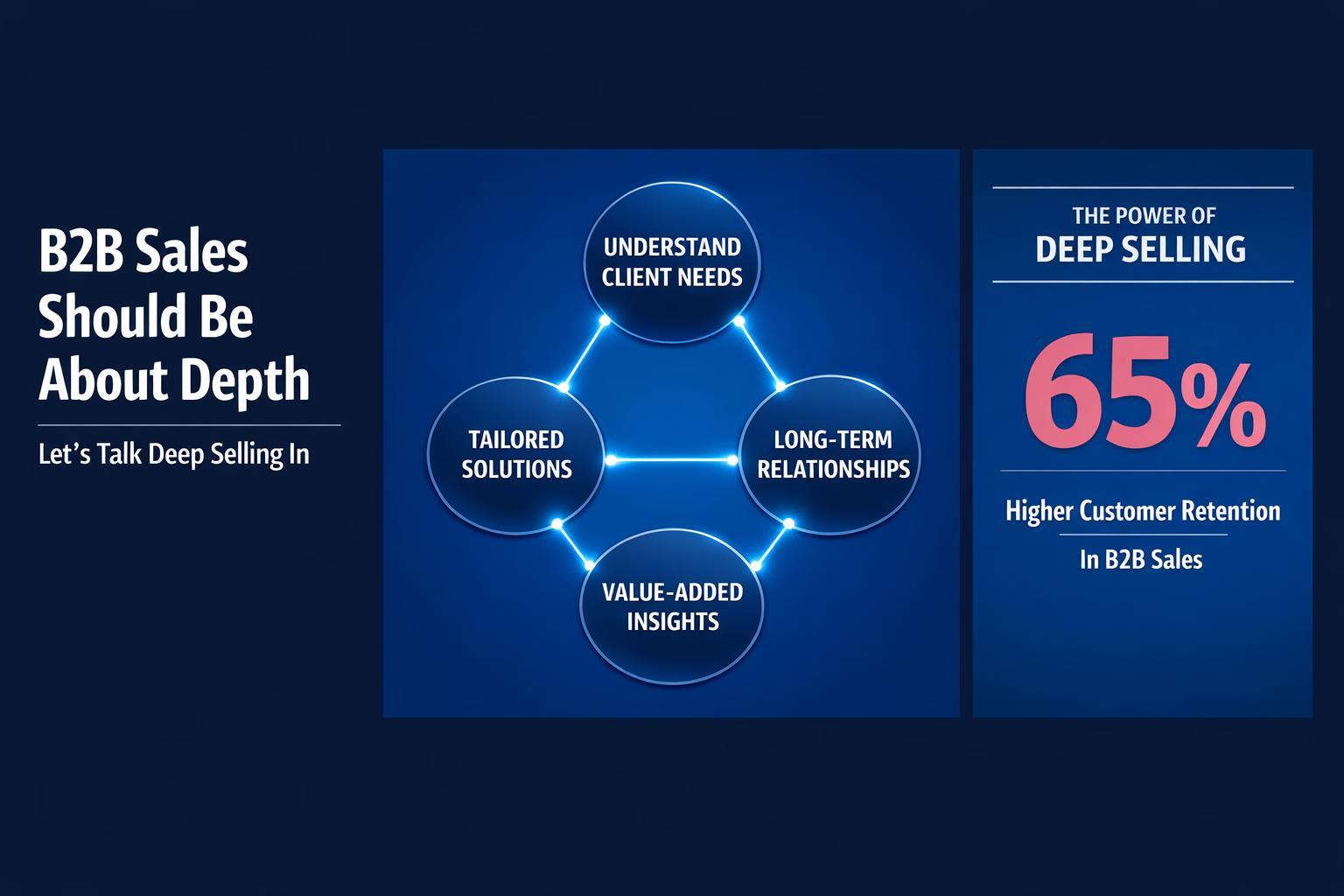
Shallow selling is a race to the bottom. Here is how to use Revspire to prioritize depth, relevance, and relationships in a noisy market.
On this page
- Shallow vs. Deep Selling
- Why Shallow Selling Fails
- What is Deep Selling?
- 3 Habits of Deep Sellers
- 1. Prioritizing Potential (The Intent Signal)
- 2. Multi-Threading (The Network Effect)
- 3. Timing (The Revspire Alert)
- From Shallow to Deep: Building the Team
- FAQs
The Era of “Spray and Pray” is Over
Deep selling prioritizes meaningful relationships, timely outreach, and buyer-first strategies. With a focus on high-potential accounts and multi-threading, deep sellers exceed targets and close high-quality deals.
Shallow selling focuses on Volume. Deep selling focuses on Relevance. In 2026, buyers are too busy for surface-level outreach. The gap between these two approaches has become impossible to ignore.
What is Shallow Selling and Why Does it Fail?
A shallow seller plays the numbers game. Send 100 emails. Drop in a fake personalized first name. Hit send and hope.
It is fast. It is familiar. It is also deeply ineffective. According to LinkedIn Research:
- Shallow sellers are 6x more likely to miss their target.
- 59% of B2B buyers actively avoid sales reps because they add no value.
- Only 5% of buyers are “in-market” at any given time.
Shallow tactics push features to the wrong people at the wrong moment, wasting effort on the 95% who aren’t ready.
What is Deep Selling in B2B?
Deep sellers understand that the deal starts long before the pitch. They prioritize the right accounts, not the biggest lists. They research, listen, and engage buyers with information that matches real business challenges.
The Stat: Deep sellers are twice as likely to exceed quota. Yet, only 18% of sellers globally practice these habits consistently.
What Sets Deep Sellers Apart? (The Revspire Advantage)
1. Prioritizing High-Potential Accounts
Deep sellers treat time as their scarcest resource. Instead of casting a wide net, they focus on accounts showing Genuine Buying Signals.
The Revspire Strategy: Use Revspire Intent Data.
- Shallow: Calling a list of 50 cold leads.
- Deep: Calling the 3 leads who spent more than 5 minutes in your Revspire Deal Room yesterday. Revspire centralizes content and conversations, filtering out the noise so you can focus on the momentum.
2. Building Relationships Across the Buying Group
The average B2B deal now involves 6 to 10 decision-makers. Deep sellers Multi-Thread relationships instead of pushing everything through one contact.
The Revspire Strategy: The Viral Room.
- Shallow: Asking your champion, “Can you introduce me to the CFO?” (They often say no).
- Deep: Sending a Revspire Room link to your champion. When they forward it to the CFO, you see the CFO’s engagement immediately. You engage IT, Finance, and Leadership asynchronously via the Room, without forcing a meeting for every interaction.
3. Finding Hidden Allies and Acting at the Right Moment
Deep selling is not just about who you speak to. It is about when. 64% of buyers say salespeople approach them too early or too late.
The Revspire Strategy: The “Right Time” Alert. Whether it is a Slack notification or a CRM trigger, Revspire tells you exactly when to step in.
- Signal: “Champion just commented on the Legal Terms.”
- Action: Call them now. This turns a “checking in” call into a “problem-solving” call.
From Shallow to Deep: Building Teams That Thrive
Transforming a team requires a shift in mindset and tooling.
🔹 Role Clarity Top-performing teams clearly define roles.
- SDRs: Focus on finding the right accounts (Deep Research).
- AEs: Focus on managing the Room (Deep Engagement).
🔹 On-Demand Training The best teams blend remote learning with real-world mentorship. Share Revspire Rooms that closed with the rest of the team. “Here is what a winning deal looks like.”
🔹 Team Selling > Solo Selling Deals with multiple reps involved are 258% more likely to close. Use Revspire to tag your Solutions Engineer or Exec Sponsor directly in the deal chat.
🔹 Sales Enablement That Actually Helps Tools should help sellers, not hinder them. Revspire organizes content, automates admin, and surfaces insights, freeing up reps to do the “Deep Work” of relationship building.
Final Thoughts: Depth Wins
Shallow selling might feel easier, but it won’t take you far. Deep selling is where real success lives—in trusted relationships and well-timed outreach.
In a noisy market, Revspire helps you cut through. It’s not about being louder. It’s about being deeper.
FAQs
What is the difference between deep and shallow selling? Shallow selling relies on mass outreach (volume). Deep selling relies on relevance, timing, and multi-threading (value).
Why does shallow selling fail? Buyers ignore generic outreach. If you don’t add value in the first 3 seconds, you are deleted.
Is deep selling slower? No. While it takes more research upfront, deep selling shortens sales cycles because you are talking to the right people about the right things.
Ready to go deep? [Link to Revspire Demo]
Platforms like Revspire Deal Room and Revspire Content Hub are purpose-built to help revenue teams execute on strategies like the ones covered above.
How Revspire Fits In
Everything discussed in this post is something Revspire was built to solve. See how Revspire helps revenue teams win more deals — all in one agentic revenue enablement platform designed for modern B2B teams.
Book a 20-minute Revspire demo and see it live.
Leave a Reply