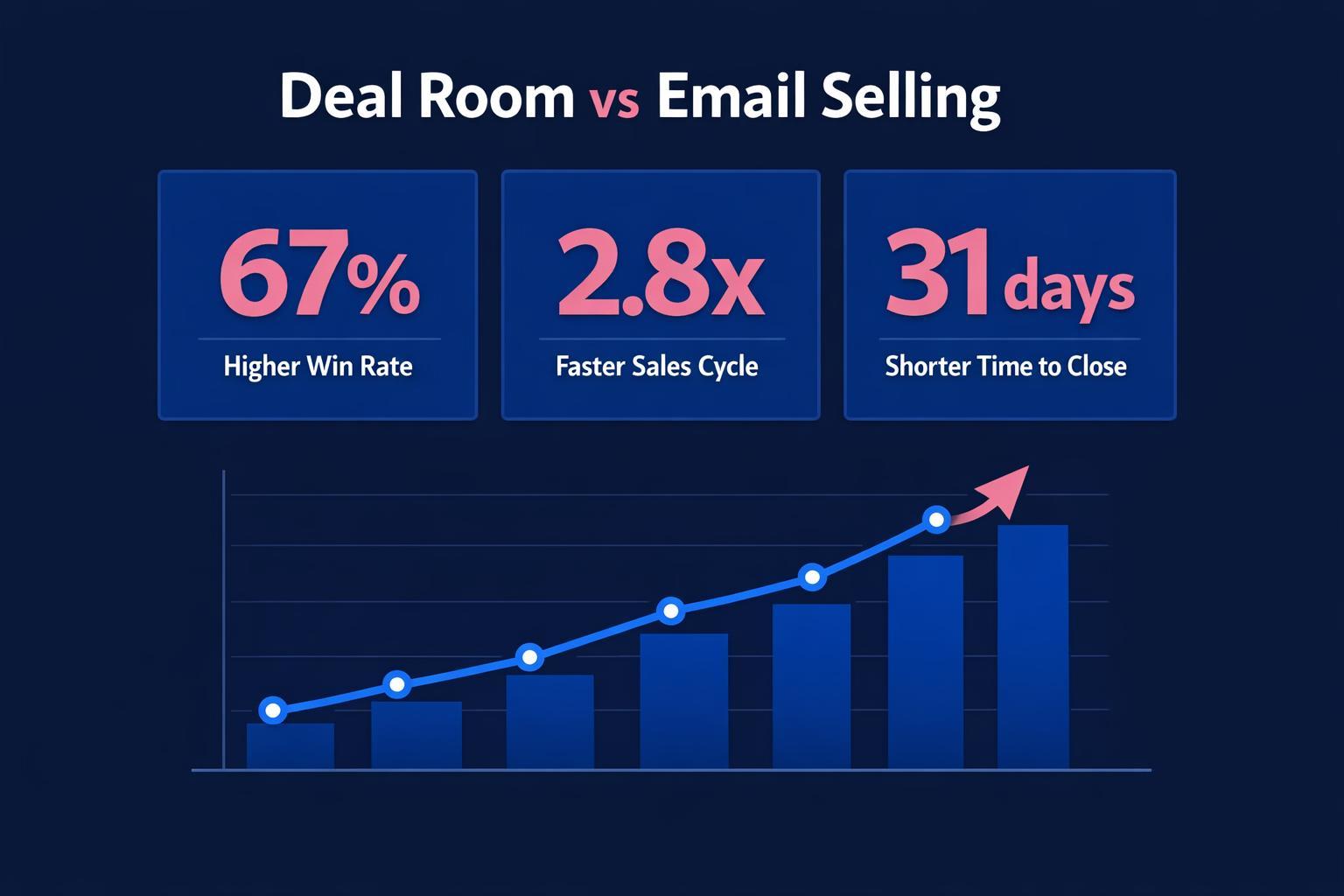
Email-based deal management loses 40% of critical context per handoff. For revenue leaders who want to build a durable competitive advantage in 2026, mastering Deal Room vs Email Selling is not optional — it is the foundation everything else builds on. This guide gives you the complete playbook.
Understanding Deal Room vs Email Selling in the Context of Modern B2B Revenue
The B2B revenue landscape in 2026 looks fundamentally different from five years ago. Buying committees are larger, cycles are longer, and buyers arrive more informed. Against this backdrop, Deal Room vs Email Selling has moved from a nice-to-have into a core operational capability. The teams that have mastered digital deal room vs email are consistently outperforming peers who have not.
What does mastery look like? It means having a documented approach, the right technology in place, clear ownership across the revenue team, and a feedback loop that improves performance quarter over quarter. Revspire Deal Rooms powers this for hundreds of B2B revenue teams — centralising the signals, content, and stakeholder intelligence that makes Deal Room vs Email Selling work at scale.
The Core Components of an Effective Deal Room vs Email Selling System
Component 1: Strategy and Ownership
Every high-performing Deal Room vs Email Selling programme starts with explicit strategy ownership. Someone on the leadership team is accountable for the outcomes, not just the activities. They set the goals, define the metrics, and ensure the approach evolves as market conditions change. Without this ownership, even the best-designed systems drift into irrelevance within two quarters.
Component 2: Process and Playbooks
The process that governs digital deal room vs email must be documented, taught, and enforced. This means more than a slide deck in a shared drive. It means embedded workflows, manager reinforcement, and technology that surfaces the right action at the right moment. Teams that treat their Deal Room vs Email Selling playbook as a living document — updated quarterly with new win-loss learnings — consistently outperform those that set it and forget it.
Component 3: Technology and Data
The technology layer for Deal Room vs Email Selling should reduce friction, not add it. Every tool should answer one question: does this help reps spend more time on high-value activities or less? Data should flow automatically between systems — CRM, engagement platform, deal room — so that leaders always have a current, accurate view of what is happening across the portfolio. Revspire Deal Rooms is purpose-built to make this happen for digital deal room vs email without requiring reps to update five different systems.
Measuring the Impact of Deal Room vs Email Selling
If you cannot measure it, you cannot improve it. The right metrics for Deal Room vs Email Selling sit at the intersection of leading and lagging indicators. Leading indicators — behaviours that predict future outcomes — give you the ability to intervene before a quarter is lost. Lagging indicators — win rates, cycle times, average deal sizes — confirm whether your approach is working.
Build a dashboard that shows both. Review it weekly. Tie it directly to coaching conversations and territory reviews. When the metrics move in the wrong direction, you want to know immediately — not at the end of the quarter when nothing can be done about it.
The path to consistently strong Deal Room vs Email Selling runs through the right system, the right data, and the right culture. Talk to Revspire to see how your team can get there faster.
Leave a Reply