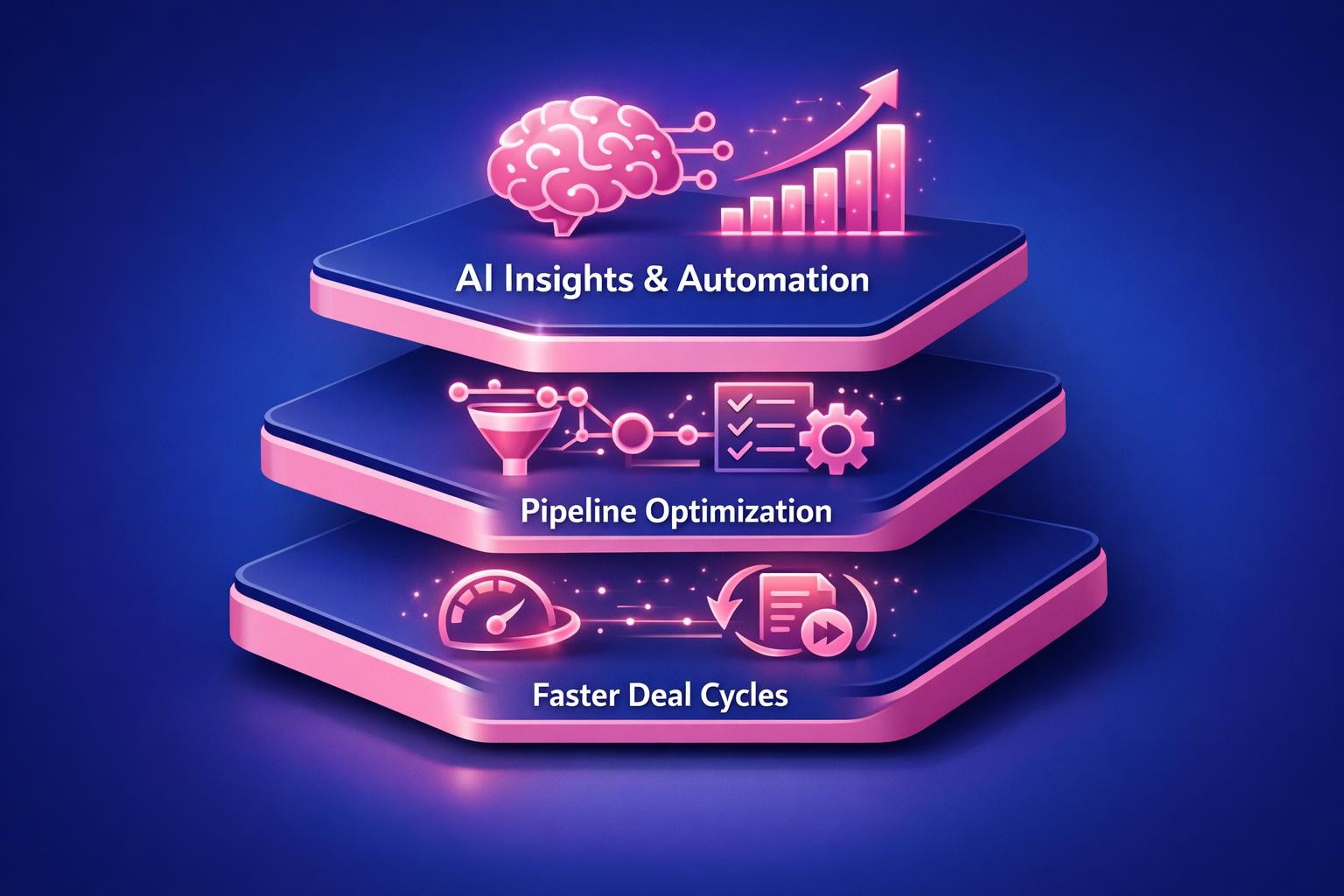
If your revenue team is struggling with AI and Deal Velocity, you are not alone. AI-assisted deal acceleration reduces average close time by 23%. Yet most sales leaders still treat this as a secondary priority — and it is costing them deals they should be winning. Here is exactly how to fix that.
Why Most Teams Get AI and Deal Velocity Wrong
The conventional approach to AI and Deal Velocity in B2B sales is reactive rather than deliberate. Teams piece together a process from tribal knowledge, manager intuition, and whatever the previous playbook said. The result is inconsistency: some reps thrive, most struggle, and leadership cannot tell why.
The core problem is that AI and Deal Velocity is treated as a one-time event rather than an ongoing system. The teams that excel at AI deal velocity B2B acceleration treat it as a continuous, data-driven discipline embedded into their daily workflow — not a quarterly initiative.
The Cost of Getting It Wrong
When AI and Deal Velocity is mismanaged, the damage spreads quickly. Deals stall without explanation. Forecast calls become guessing games. Reps burn cycles on opportunities that never had a realistic chance of closing. Revspire Deal Acceleration helps revenue teams avoid exactly this by surfacing the signals that matter before deals go dark.
A Practical Framework for AI and Deal Velocity
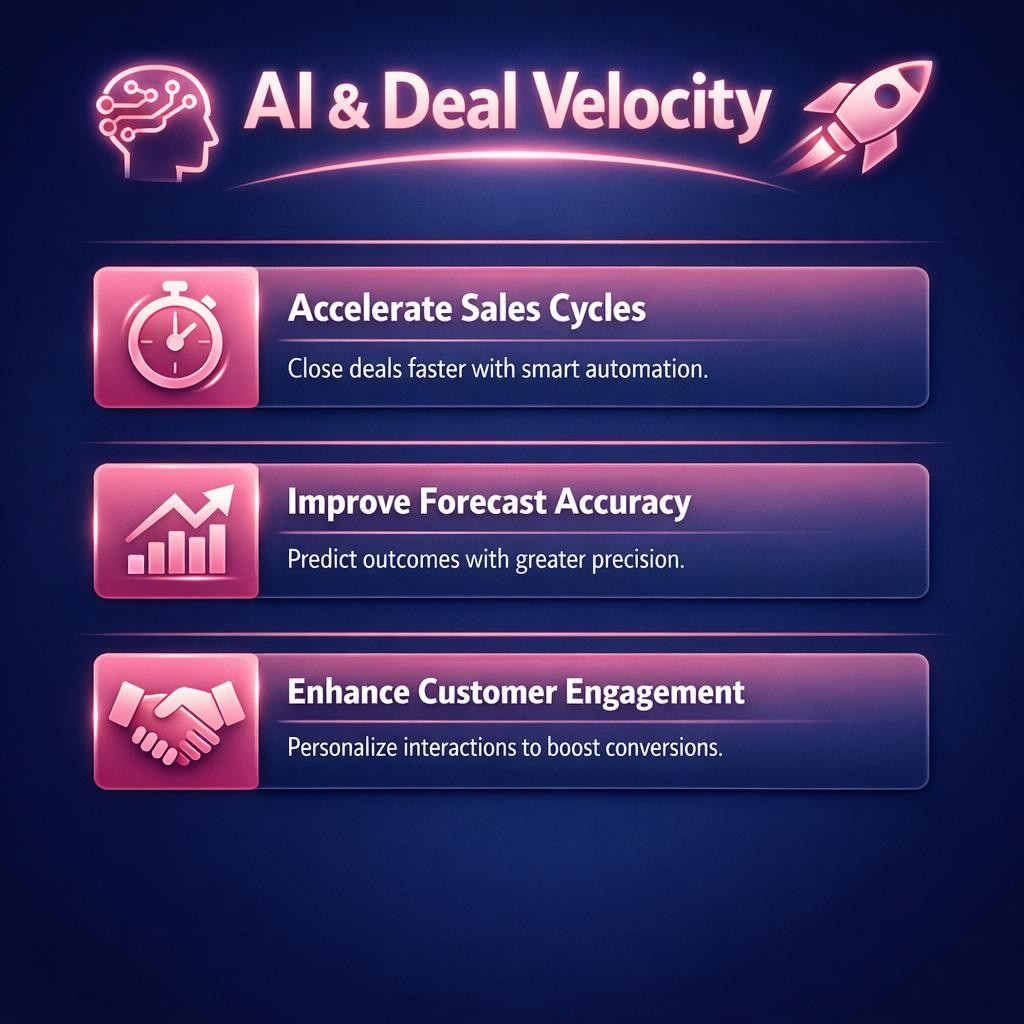
The teams that consistently win with AI deal velocity B2B acceleration share three structural advantages. First, they define what good looks like: clear milestones, documented criteria, and a shared vocabulary across the team. Second, they instrument the process — every stage produces data that informs the next. Third, they build feedback loops so that what they learn from closed-won and closed-lost deals continuously improves how they work.
Step One: Audit Your Current State
Before you can improve AI and Deal Velocity, you need an honest baseline. Pull the last six months of deal data. Map every opportunity against the stages of AI deal velocity B2B acceleration and identify where deals are falling out and why. Be specific: which reps, which segments, which deal sizes. This audit usually reveals two or three structural problems that account for the majority of losses.
Step Two: Build the Operating Model
An operating model for AI and Deal Velocity answers three questions: what actions should happen, at what stage, and who is accountable. Document this explicitly. Resist the urge to over-engineer it — a simple, followed model outperforms a sophisticated, ignored one every time. Revenue teams that use Revspire Deal Acceleration embed this model directly into their deal rooms, making the right next action visible to every stakeholder in the deal.
Step Three: Measure What Matters
The metrics for AI and Deal Velocity should connect directly to revenue outcomes. Avoid vanity metrics like activity counts. Focus instead on conversion rates at each stage, time-in-stage benchmarks, and the correlation between specific behaviours and win rates. When you see the data clearly, coaching conversations become factual rather than anecdotal.
What the Top Revenue Teams Do Differently
The best revenue teams treating AI deal velocity B2B acceleration as a competitive advantage rather than an operational necessity. They invest in the systems, data, and culture that make AI and Deal Velocity a consistent strength. They assign clear ownership, review it in every pipeline call, and use the output to continuously sharpen their go-to-market strategy.
Most importantly, they treat buyer signals as the primary input to every decision about AI and Deal Velocity. Rather than relying on rep intuition, they surface engagement data, stakeholder activity, and deal-level signals in real time — giving every layer of the organisation the information they need to act with confidence.
Ready to see how Revspire helps your team master AI deal velocity B2B acceleration? Book a demo and we will show you exactly how the world’s fastest-growing B2B revenue teams use our platform to close more deals, faster.
Leave a Reply