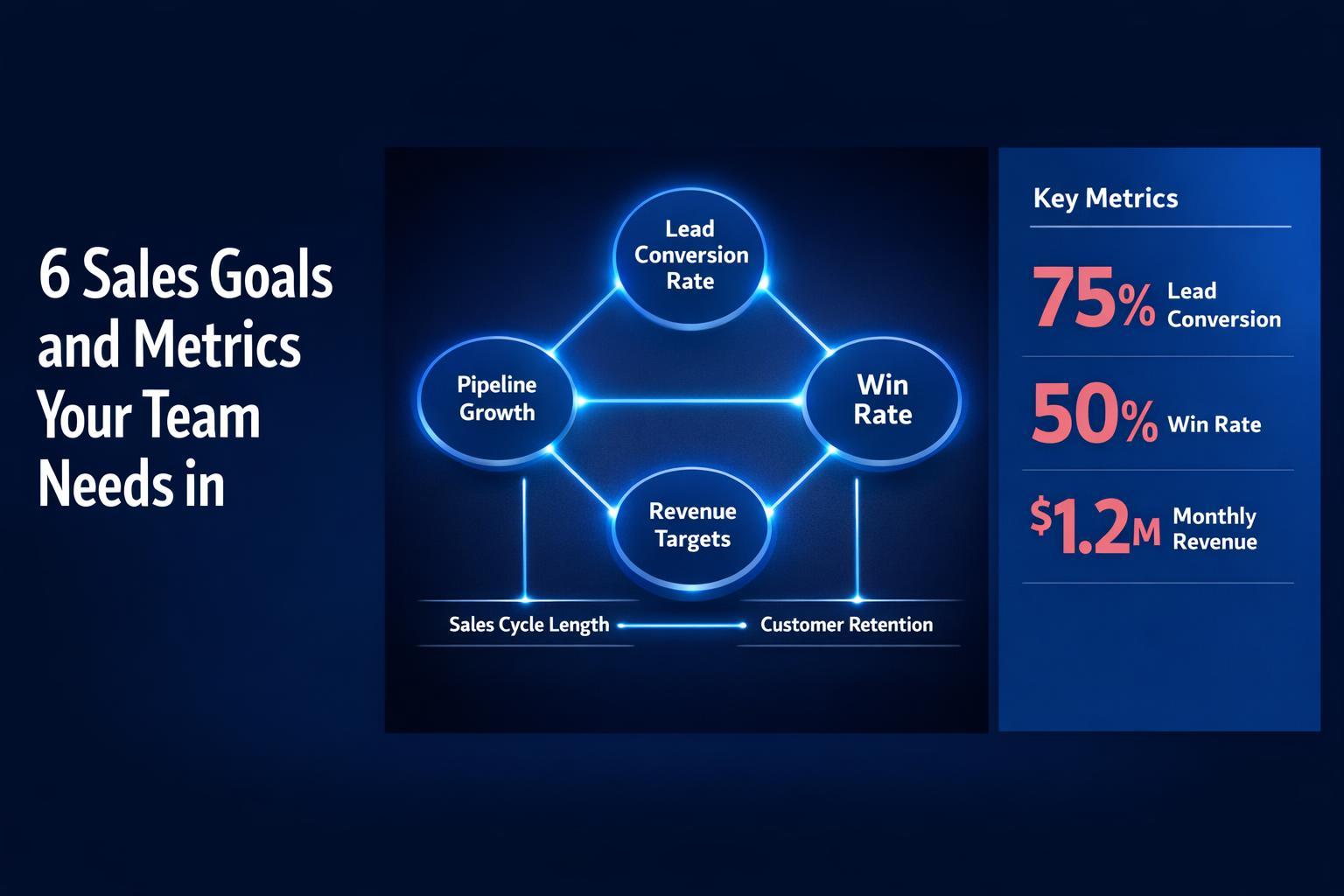
Unlock the potential of your sales team. Move beyond vanity metrics and start tracking the numbers that actually predict revenue.
On this page
- The Data Revolution
- 1. Build Group Goals (The Culture)
- 2. Monthly Consistency (The Forecast)
- 3. Prioritize by Intent (The Signal)
- 4. Incentivize Retention (The NRR)
- 5. The Waterfall Goal (Momentum)
- 6. The Stretch Goal (Velocity)
- Conclusion
Stop Tracking Vanity Metrics.
Sales teams have always been obsessed with numbers. In the past, it was “Calls Made” and “Emails Sent.” But in 2026, tracking activity isn’t enough. You can make 100 calls and get zero results.
To drive real growth, you need to measure Outcomes and Leading Indicators. Generating data is easy; extracting insight is hard. We have selected 6 metrics that all modern sales managers need to track to motivate their teams and predict revenue accurately.
1. Build Group Goals That Matter
Individual quotas are necessary, but they can create a siloed culture. Some goals should be team-based to foster collaboration.
The Strategy: Call a meeting and ask your team what behaviors they want to improve.
- New Metric: “Most multi-threaded deals.” (Who got the most stakeholders involved?)
- New Metric: “Highest Digital Deal Room Engagement.” (Who got the prospect to spend the most time reading the proposal?)
The Revspire Angle: Use Revspire Analytics to gamify this. Create a leaderboard not just for revenue, but for “Buyer Engagement Minutes.” This rewards the reps who are building genuine interest, not just spamming calls.
Shutterstock
Explore
2. Work Out and Communicate Monthly Goals
If you want to hit your annual number, you must break it down. But don’t just divide by 12. That ignores seasonality.
The Strategy: Use historical data to map the flow. January might be slow; Q4 might be frantic. Set Dynamic Monthly Goals.
- January Goal: Pipeline Generation (Set the stage).
- March Goal: Closing (Harvest the crop).
The Revspire Angle: Use Revspire to forecast accurately. If your Deal Rooms have low engagement in January, you know you will miss your March goal. Revspire gives you the early warning signal to adjust your strategy before it’s too late.
3. Prioritize Your Goals (The “Signal” Metric)
You can’t chase every lead. You need to chase the right leads. The most important metric in 2026 is Deal Quality.
The Strategy: Prioritize goals that impact Net Revenue Retention (NRR). A deal that closes fast but churns in 3 months is a failure.
The Revspire Angle: Track the “Health Score” of the deal.
- Did the Legal team view the contract?
- Did the Technical team view the API docs? If the answer is “Yes,” prioritize that deal. Revspire highlights these High-Intent opportunities so your team focuses energy where it pays off.
4. Tie Goals to Incentives (CLV over TCV)
If you incentivize bad behavior, you get bad results. If you pay huge commissions on deals that churn, you are burning cash.
The Strategy: Tie a portion of the commission to Customer Lifetime Value (CLV) or successful onboarding. Incentivize your reps to close deals that stick.
The Revspire Angle: Because the Revspire Deal Room transitions from Sales to Customer Success, you can track the continuity. Reward reps whose clients actively use the “Onboarding Tab” in the Deal Room. This proves they sold the solution correctly and set the client up for success.
5. Boost Morale with Waterfall Goals
Sales can be demoralizing. If a rep misses quota 3 months in a row, they check out. Waterfall Goals help you avoid that.
The Strategy: Set incremental milestones.
- Phase 1: Get 10 prospects to open a Deal Room. (Achievable).
- Phase 2: Get 5 prospects to view the pricing. (Harder).
- Phase 3: Close 1 deal. (The Result).
The Revspire Angle: Celebrating the small wins (Phase 1 & 2) keeps morale high. Even if the deal hasn’t closed yet, seeing that “Prospect X just spent 20 minutes in your Deal Room” gives the rep the dopamine hit they need to keep going.
6. The Stretch Goal (Velocity)
Stretch goals are for your high performers. But don’t just ask for “More Revenue.” Ask for Faster Revenue.
The Strategy: Challenge your team to reduce the Sales Cycle Length by 20%.
- Current Avg: 90 Days.
- Stretch Goal: 72 Days.
The Revspire Angle: This is where Digital Deal Rooms shine. By providing all the information (Security, Pricing, Legal) in one link upfront, you remove the back-and-forth emails. Reps using Revspire often hit this stretch goal because the buyer can move as fast as they want, without waiting for the rep to send files.
Conclusion
Sales quotas are necessary, but they are lagging indicators. To help your reps reach their full potential, you must track Engagement, Velocity, and Intent.
Revspire is the platform that makes this invisible data visible. It transforms your sales team from “Call Centers” into “Revenue Engines.”
Start tracking what matters. [Link to Revspire Demo]
How Revspire Fits In
Everything discussed in this post is something Revspire was built to solve. See how Revspire helps revenue teams win more deals — all in one agentic revenue enablement platform designed for modern B2B teams.
Book a 20-minute Revspire demo and see it live.
Leave a Reply