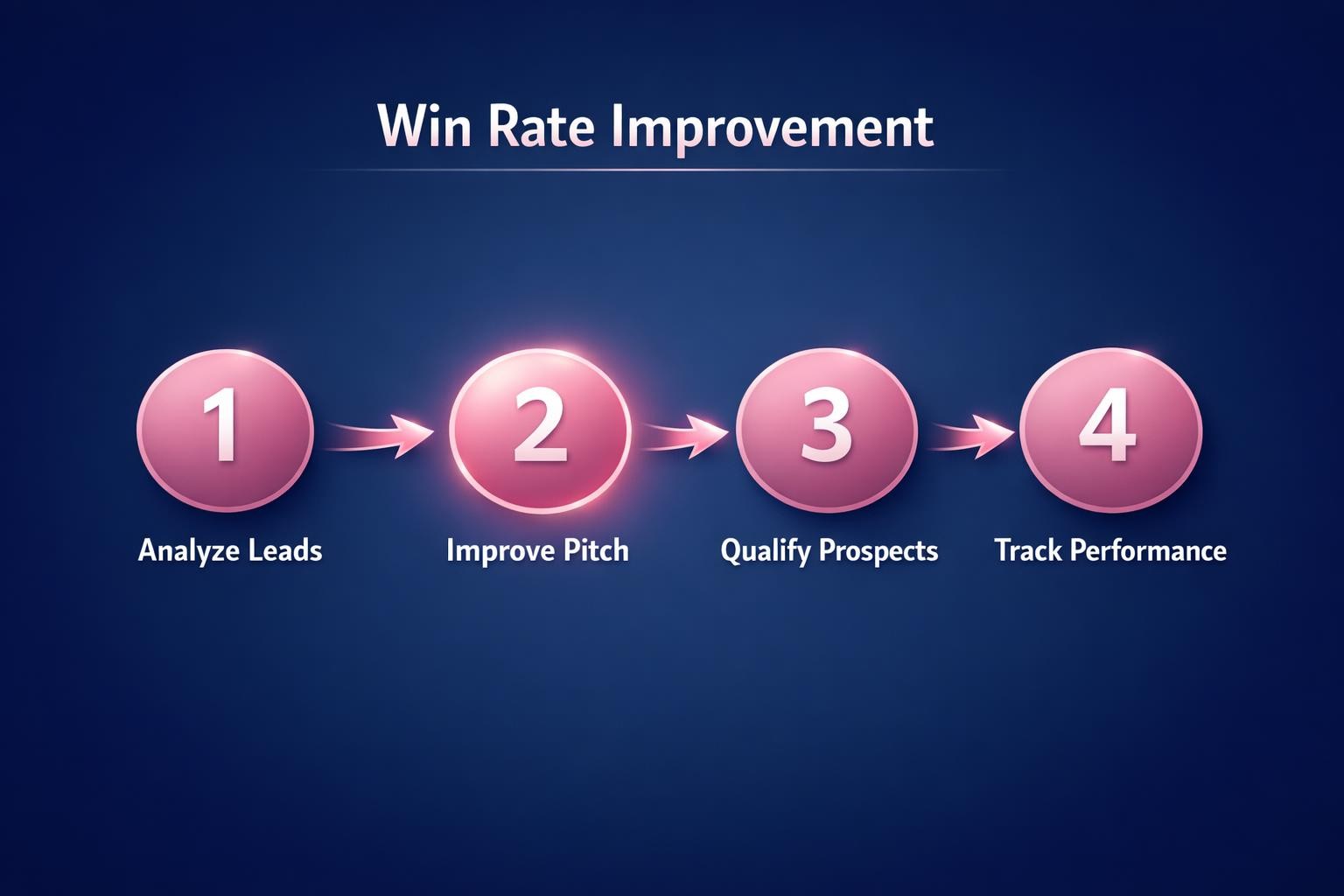
Improving discovery quality alone increases win rates by an average of 19%. Despite the evidence, many B2B revenue teams are making predictable, fixable mistakes in how they approach Win Rate Improvement. Here are the biggest ones — and exactly how to correct them.
Mistake 1 and 2: Strategic Errors
Mistake 1: Treating Win Rate Improvement as a One-Time Initiative
The most common win rate improvement B2B sales mistake is treating it as a project with a start and end date rather than an ongoing operational discipline. Teams launch a new approach, see initial results, then let it drift as the day-to-day pressure of pipeline management takes over. Within two quarters, the gains evaporate and the problem returns — usually worse than before because expectations were raised and not met.
The Fix: Assign a permanent owner to Win Rate Improvement outcomes. Build it into your operating cadence with standing review meetings, defined metrics, and quarterly improvement goals. Treat it like any other core business process — something that is always running, always being optimised, and always connected to revenue outcomes.
Mistake 2: Relying on Intuition Instead of Data
Revenue teams that manage win rate improvement B2B sales by gut feel consistently underperform against those that use data. The problem with intuition is that it is subject to availability bias — leaders remember the last few deals vividly and make policy based on them rather than the full portfolio picture. Revspire Win-Loss Intelligence solves this by surfacing deal-level data that gives leaders an objective view of Win Rate Improvement performance across every opportunity.
The Fix: Define three to five leading indicators for Win Rate Improvement and track them weekly. When the data disagrees with the intuition, trust the data first and investigate the discrepancy. Over time, your intuitions will improve because they will be calibrated against real evidence.
Mistake 3 and 4: Execution Errors
Mistake 3: Single-Threading the Relationship
One of the most expensive Win Rate Improvement mistakes is building the entire relationship around a single stakeholder. When that person goes dark, gets reorganised, or leaves the company, the deal collapses — and the team has no fallback. This is especially dangerous in enterprise deals where buying committees average ten or more members.
The Fix: Require multi-threaded engagement as a condition for advancing past stage two. Map every stakeholder in the buying committee, assign coverage, and track engagement with each one. Deals where only one contact is active should be flagged as high-risk regardless of what the rep reports.
Mistake 4: Confusing Activity with Progress
High activity levels in win rate improvement B2B sales can mask a complete absence of forward momentum. Reps who send many emails, have many calls, and create many tasks can still have a pipeline that never moves. The activity metrics look healthy while the revenue outcomes are not. This is one of the most misleading patterns in sales management and one of the most common.
The Fix: Measure outcomes, not activities. Track stage progression velocity, buyer engagement quality, and stakeholder coverage breadth. Use these outcome metrics as the primary lens for coaching conversations and pipeline reviews. When activities are high but outcomes are poor, that is the signal to investigate what is happening inside the deal, not to ask for more activity.
Mistake 5: Failing to Learn from Losses
Most teams conduct minimal post-mortem analysis on lost deals. The reasons are understandable — the loss is painful, the team wants to move on, and there is always more pipeline to work. But the cost of not learning from losses is that you keep making the same Win Rate Improvement mistakes quarter after quarter, compounding the damage over time.
The Fix: Implement a structured loss review process. After every significant lost deal, spend thirty minutes with the rep analysing the specific win rate improvement B2B sales breakdowns that contributed to the loss. Document the findings and update playbooks accordingly. Over time, this creates a knowledge base of what not to do that is as valuable as any sales training programme you can buy.
Fixing these mistakes requires the right process, data, and platform working in alignment. See how Revspire helps B2B revenue teams eliminate these patterns and build a Win Rate Improvement practice that consistently wins.
Leave a Reply