B2B buyer enablement in 2026 represents one of the most significant reframings in enterprise sales in a generation. For decades, the sales motion has been organised around the seller’s process: prospecting, discovery, demo, proposal, negotiation, close. Each stage is defined by what the seller does next. The problem is that the buyer’s process — their internal consensus-building, risk assessment, stakeholder alignment, and change management challenges — is almost entirely invisible in this model. Buyer enablement inverts the frame entirely: instead of asking “what do we do next?” the question becomes “what does our buyer need to be able to make this decision?”
Why the Seller-Centric Model Is Losing Deals
The seller-centric sales model is failing for a structural reason: today’s B2B buyers do the majority of their research and evaluation independently, before engaging with sales. Gartner’s research found that when B2B buyers are actively considering a purchase, they spend only 17% of their total evaluation time talking to potential vendors. The other 83% is spent doing internal research, meeting with stakeholders, building consensus, reviewing content, and assessing risk — all without the seller in the room.
The Invisible 83%
If your sales process is designed exclusively around the 17% of buyer time that involves you, you are designing for the minority of the decision. The 83% — where the real work of consensus-building and internal selling happens — is where most deals are actually won or lost. Buyer enablement means making that 83% as productive as possible by giving the buyer everything they need to navigate it effectively: the right content, the right tools, and the right structure to organise internal conversations that you cannot attend.
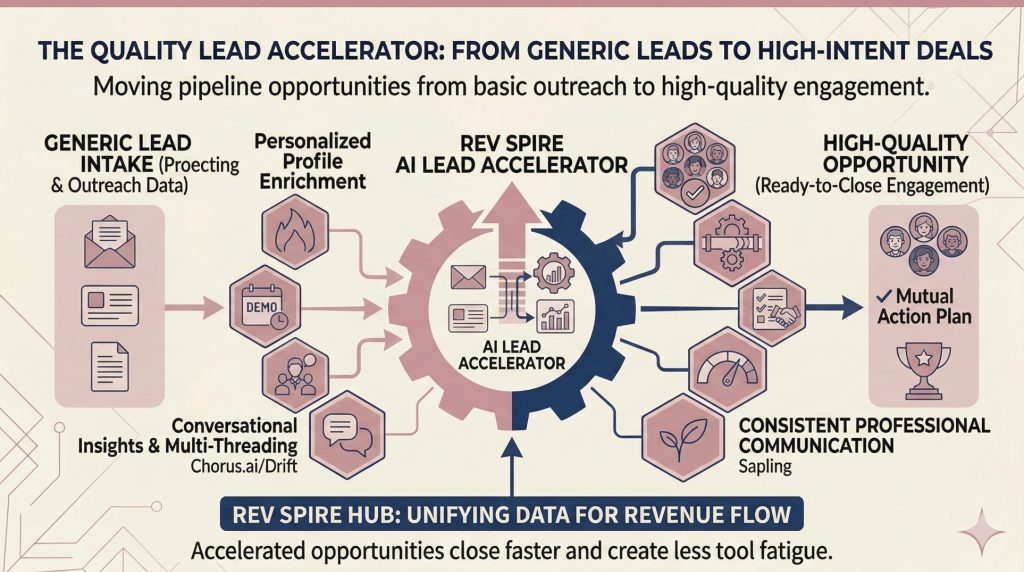
This is exactly why Revspire Deal Rooms are built around buyer workflows rather than seller workflows. The deal room is designed to be a resource the buyer uses when you are not in the conversation — a hub that consolidates the proposal, business case, case studies, security documentation, ROI data, and mutual action plan into a single workspace the buying committee can navigate independently and collaborate within.
What Buyer Enablement Looks Like in Practice

Enable the Buying Process, Not the Sales Process
The first practical step in buyer enablement is mapping the buyer’s decision-making process independently of your sales stages. What is the first thing the buyer does when they identify a problem? Who do they consult internally? What risk assessments are required? Who needs to approve the budget? What compliance checks apply? What internal change management hurdles exist? This buyer journey map is almost always more complex, longer, and less linear than the seller’s pipeline stages suggest.
Once you have mapped the buyer journey, you can identify where buyers get stuck and build enabling resources for each friction point. Security questionnaire template? Provide it before they ask. ROI calculator tailored to their industry? Build it into the deal room. Executive summary the champion can take to the CFO? Draft it for them. Business case objection guide? Anticipate every objection the CFO will raise and give your champion the answers before the internal meeting happens.
Champion Enablement Is Buyer Enablement
The most underserved person in most B2B deals is the champion — the buyer-side stakeholder who is advocating for your solution internally. Champions are selling on your behalf in conversations you cannot attend, defending your price point in budget discussions you have no visibility into, and navigating political resistance that they rarely surface to you. Buyer enablement means making your champion as effective as possible in all of those invisible conversations.
The best champion enablement kits include: a one-page executive summary of business value in language tailored to the CFO’s priorities; a comparison table that objectively addresses the alternatives the buying committee will inevitably consider; answers to the ten hardest questions the champion will face internally; and a recommended internal meeting agenda for the stakeholder alignment conversation that precedes the final decision. Champions who receive this level of support close deals. Champions left to their own devices stall them.
Measuring Buyer Enablement Effectiveness
Buyer Engagement Metrics Are the New Sales Activity Metrics
If you are measuring your sales team purely on seller activity — calls made, emails sent, demos delivered — you are measuring inputs that have a weak connection to outcomes. Buyer enablement requires a new measurement framework centred on buyer behaviour: How often is the deal room being accessed by buyer-side stakeholders? How many unique buying committee members have engaged with shared content? What is the average time between content sharing and buyer engagement? How quickly do buyers respond to mutual action plan milestones?
These buyer engagement metrics are far more predictive of deal outcomes than seller activity metrics. A deal where the buying committee is actively engaging with the deal room daily is a deal moving toward close. A deal where the rep is making daily call attempts but the buyer has not opened the shared proposal in three weeks is a deal in serious trouble — and the seller-activity metrics alone will not tell you that.
Content Engagement Reveals Buyer Decision Stage
Different content types correlate with different stages of the buyer’s decision-making process. Awareness-stage buyers read blog posts and watch overview videos. Evaluation-stage buyers engage with case studies, competitor comparisons, and ROI calculators. Late-stage buyers focus on security documentation, implementation timelines, contract terms, and references. Revspire’s Content Hub tracks which content each buyer stakeholder is engaging with, enabling your sales team to understand exactly where each stakeholder is in their individual decision journey — and tailor their next interaction accordingly.
The Organisational Shift Buyer Enablement Requires
Buyer enablement is not a sales technique — it is an organisational posture. It requires marketing to create content that serves buyer decision-making, not just seller prospecting. It requires sales engineering to build evaluation tools the buyer uses independently, not just demos the seller controls. It requires customer success to share onboarding insights back into the sales cycle so buyers can see what success looks like before they commit. And it requires revenue operations to measure the buyer-side metrics that reveal whether the enablement is working.
The companies making this shift in 2026 are not just closing deals faster — they are closing better deals with buyers who are more committed, better prepared, and more likely to expand their relationship with your company over time because the buying experience itself built trust.
How Revspire Fits In
Revspire is the buyer enablement platform for B2B revenue teams. Deal rooms built around the buyer’s decision-making journey, content intelligence that surfaces the right asset for each stakeholder at each decision stage, and mutual action plans that give buyers the structure they need to drive internal consensus — everything your buyers need to decide, in one place.
Book a 20-minute Revspire demo and see buyer enablement in action.
Leave a Reply