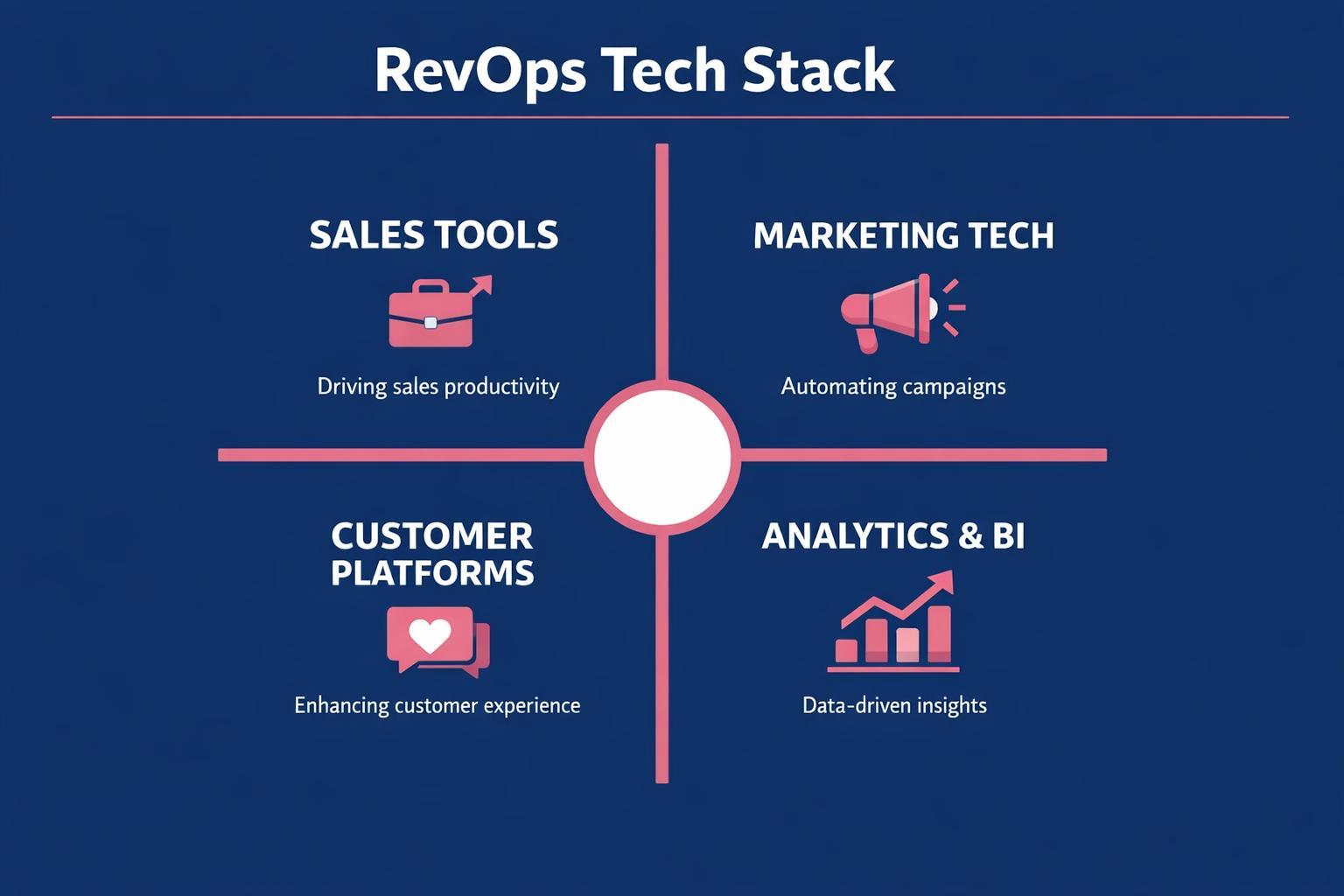
The average sales tech stack has grown to 12 tools, up from 5 in 2019. The difference between revenue teams that consistently hit quota on revenue operations tech stack 2026 and those that struggle often comes down to a handful of deliberate choices. Here are seven strategies the top performers use — and how to apply each one.
Strategy 1 through 4: Building the Foundation
1. Define What Great Looks Like for RevOps Tech Stack
Top teams do not leave revenue operations tech stack 2026 to intuition. They write down exactly what excellent execution looks like at each stage of the deal, and they hold every rep accountable to that standard. This shared definition creates consistency across the team and makes it possible to coach, measure, and improve systematically. The teams that skip this step are the ones that see wild variance in rep performance and cannot explain why.
2. Instrument Every Stage with Leading Indicators
Lagging metrics like win rate and quota attainment tell you what happened. Leading indicators — the behaviours that predict those outcomes — tell you what is about to happen. For RevOps Tech Stack, leading indicators might include stakeholder engagement rates, content consumption, mutual action plan progression, or deal velocity at each stage. Revspire Revenue Intelligence surfaces these signals automatically so managers can act before deals go sideways.
3. Embed RevOps Tech Stack Into Your Weekly Cadence
If revenue operations tech stack 2026 does not appear on your weekly pipeline call agenda, it will not get the attention it needs. The best revenue teams build a standing review of RevOps Tech Stack health into their rhythm — not as a status update, but as a structured conversation about what needs to change in the next 7 days to improve outcomes. This cadence creates accountability and catches problems early enough to fix them.
4. Use Deal-Level Coaching to Close Skill Gaps
Generic training rarely moves the needle on RevOps Tech Stack. What works is deal-specific coaching — reviewing live opportunities with each rep, identifying exactly where their revenue operations tech stack 2026 execution breaks down, and working through the fix in real time. This approach is more time-intensive but produces dramatically better skill development than classroom training alone.
Strategy 5 through 7: Scaling What Works

5. Capture Win-Loss Intelligence Systematically
Every won and lost deal contains insights about what works and what does not in your approach to RevOps Tech Stack. Most teams let these insights evaporate. The best teams capture them deliberately — through post-deal interviews, CRM data analysis, and structured win-loss reviews — and feed them back into playbooks, training, and strategy. Over time, this creates a continuously improving system that compounds quarter over quarter.
6. Align Technology to Support the Process
Technology should serve the revenue operations tech stack 2026 process, not define it. Evaluate every tool in your stack against a simple question: does this make RevOps Tech Stack easier and more consistent, or does it add friction? Consolidate where you can. Ensure your tools talk to each other so data flows without manual intervention. Revspire Revenue Intelligence is built around exactly this principle — removing the operational overhead so revenue teams can focus on what matters.
7. Create Feedback Loops That Drive Continuous Improvement
The final strategy is the one that separates great teams from very good ones: building feedback loops that make the whole system smarter over time. This means reviewing RevOps Tech Stack metrics quarterly against targets, updating playbooks when you learn something new, soliciting feedback from buyers on their experience, and constantly asking: what is one thing we could do differently that would most improve our revenue operations tech stack 2026 outcomes? The teams that ask this question relentlessly are the ones that build durable competitive advantages.
Ready to put these strategies to work with the right platform underneath them? Book a Revspire demo and see how your team can operationalise RevOps Tech Stack at scale.
Leave a Reply