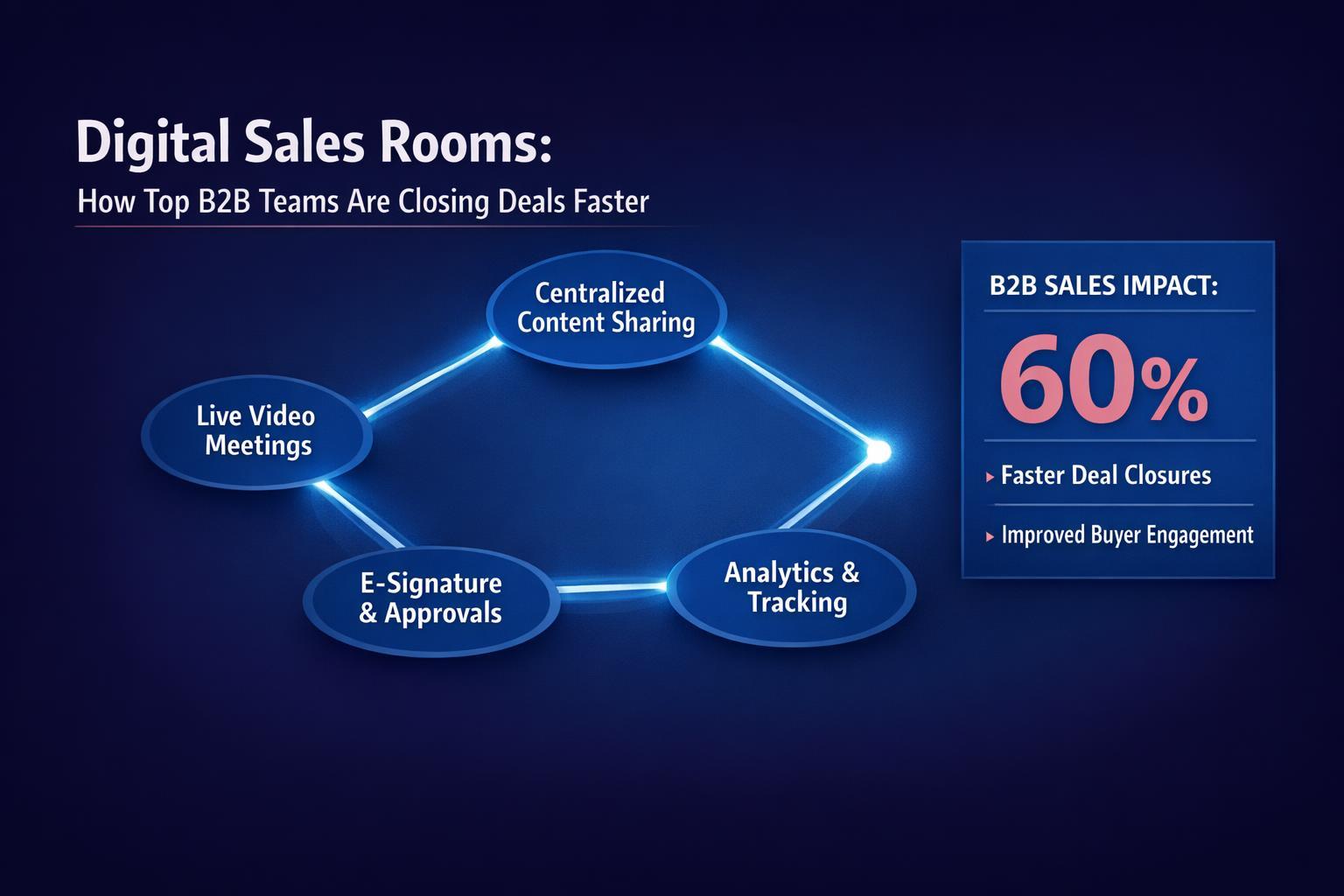
In 2024, Digital Sales Rooms were a competitive advantage. In 2026, they are table stakes. Gartner predicted that 30% of all B2B sales cycles would be managed through DSRs by this year – and that number is proving conservative. The real question is not whether you need one. It is whether yours is actually working.
Most are not. And the gap between a DSR that accelerates a deal and one that just collects dust is almost entirely about how it is used – not what it can technically do.
The Problem With How Most Teams Use DSRs Today
The classic failure mode: sales rep creates a beautiful room, sends the link, and then waits. The buyer gets a generic welcome message, a deck from six months ago, and a “let me know if you have questions” call-to-action that leads nowhere.
That is not a Digital Sales Room. That is a landing page with a logo.
A real DSR is a living deal environment – one that evolves as the deal evolves, adapts to each stakeholder’s role and interest, and tells the rep exactly what is happening on the buyer side at all times.
What Top-Performing Teams Are Actually Doing
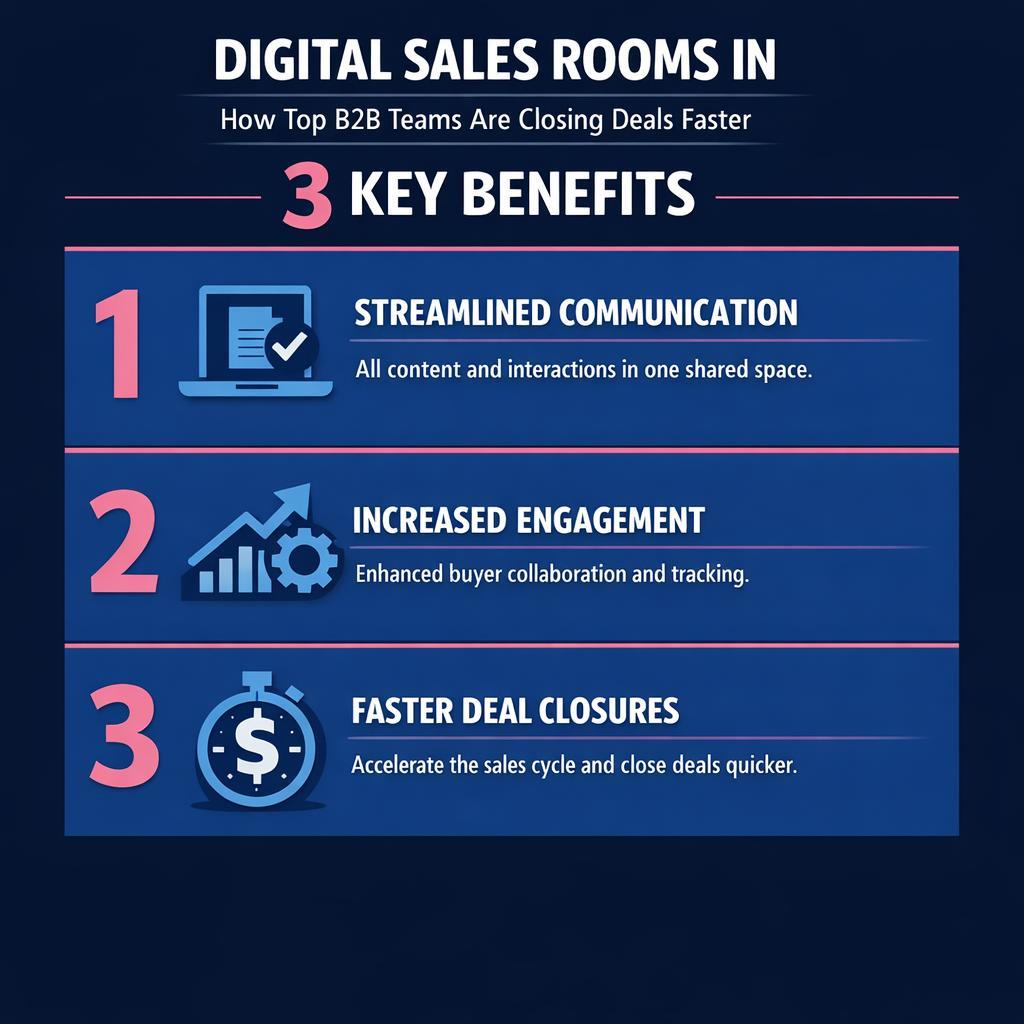
They map stakeholders before they build content
B2B buying committees now average 6 to 10 decision-makers. High-performing teams use their DSR to map every stakeholder – CFO, IT, Champion, Legal – and curate tailored views for each. The CFO sees ROI models and implementation timelines. The IT lead sees security docs and integration specs. One room, multiple personalised experiences. Revspire’s Deal Room makes this stakeholder mapping native to the experience.
They use engagement data to drive the next action
When your Champion has viewed the pricing section four times but has not shared the room with their CFO, that is a signal. When the IT lead spent 40 minutes on the security documentation, that is a buying signal. Top teams use these signals to time outreach perfectly – not on a calendar schedule, but on actual buyer behavior.
They embed Mutual Action Plans to create accountability
Nothing extends a sales cycle like vague next steps. “I will circle back after the internal review” is the death knell of pipeline velocity. A Mutual Action Plan embedded in the DSR creates shared accountability – both sides own named milestones with dates. It transforms the deal from a vendor-led process into a collaborative project. This is one of the most underused features in DSRs and one of the highest-leverage. Read more in our deep dive on Mutual Action Plans.
They let the content library do the curation work
Manually hunting for the right case study, the right one-pager, the right demo video is a productivity killer. The best teams have connected their Content Hub directly to their deal rooms, so AI can recommend and surface the right assets based on deal stage, industry, and persona – automatically.
The Stats That Should Concern You If You Have Not Adopted Yet
39% of B2B buyers are now willing to spend over $500,000 through a purely digital, self-serve process. They do not need your rep to walk them through a deck anymore – they need an environment that gives them the answers they need, on demand, at their pace.
Teams using DSRs are reporting deal cycle reductions of 20 to 35% and win rate improvements of 15 to 25%. These are not vendor projections – they are outcomes being reported by revenue teams who treat their DSR as the central nervous system of every deal, not a nice finishing touch.
The Revspire POV: A DSR Should Think, Not Just Display
Most DSR platforms are content delivery systems with a polished interface. We think that is not enough. A DSR should actively read the deal – understanding who is engaged, who has gone quiet, what content is resonating, and what the likely next objection is – and help the rep respond to all of it intelligently.
That is the Revspire difference. Our Digital Sales Room is not a folder. It is an agentic deal environment that works even when your rep is not logged in.
See a live Revspire Deal Room – watch how it reads buyer signals in real time.
Leave a Reply