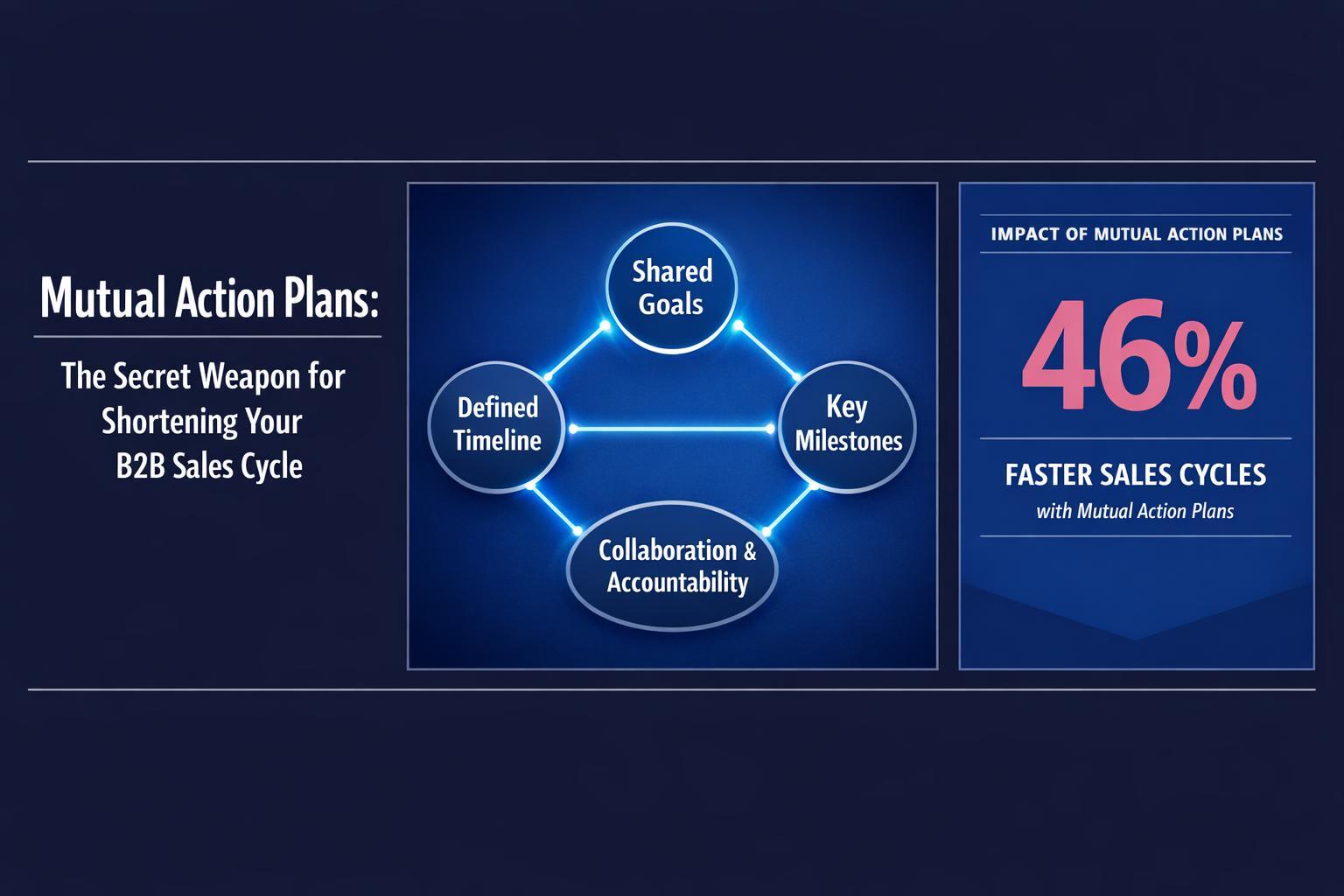
Ask any VP of Sales what kills deals, and vague next steps will be in the top three every time. “I will check with my team.” “We are still in the internal evaluation phase.” “Things are moving but we need a bit more time.” These are not objections – they are symptoms of a deal with no shared structure. And the fix is not more follow-up emails. It is a Mutual Action Plan.
What a Mutual Action Plan Actually Is
A Mutual Action Plan (MAP) is a shared, co-owned document between buyer and seller that defines the specific steps, owners, and timelines required to complete a deal. Not just your side of the deal – both sides.
Done well, a MAP transforms the sales process from a seller-led pitch sequence into a collaborative project with joint accountability. The buyer is not watching you present your roadmap. They are contributing to theirs.
This is not a fancy follow-up email template. It is a structural shift in how the deal is managed.
Why MAPs Compress Sales Cycles
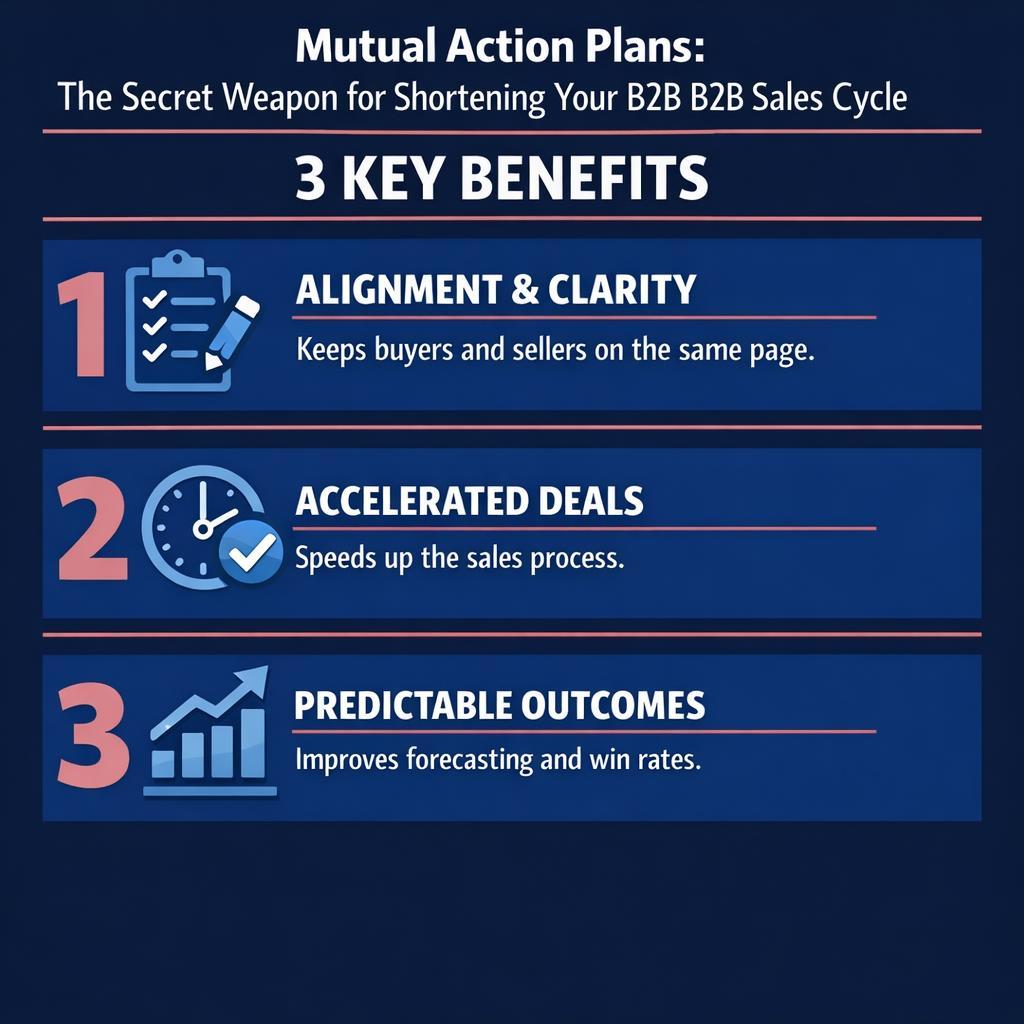
Sales cycles stretch for three primary reasons: unclear next steps, invisible internal processes, and diffuse accountability. MAPs address all three.
Clarity eliminates stalling
When both parties have agreed on “by March 15, Legal will complete security review and Procurement will return the redlined MSA,” there is nowhere to hide. The deadline is visible to everyone. Delays get surfaced immediately, not three weeks later in a quarterly pipeline review.
Visibility into the buyer’s internal process
Most deals do not stall because the champion changed their mind – they stall because internal procurement, legal, or finance has a process the seller never mapped out. A MAP forces this conversation early: “What does your internal approval process look like? Who needs to be involved? What is the standard timeline for legal review?” Building this into the plan at the start removes the surprise 6-week legal delay in month four.
Shared ownership changes buyer psychology
Here is the subtle but powerful effect: when a buyer contributes to a MAP, they become invested in completing it. They have co-created the plan. Walking away now means abandoning their own commitments – which is psychologically harder than simply ghosting a vendor’s proposal.
How to Build a MAP That Actually Gets Used
Most MAPs fail because they are built by the seller alone, sent as a PDF, and promptly ignored. Here is how to build one that sticks:
- Build it collaboratively, in the deal room. If the MAP lives in your Digital Sales Room, the buyer sees it every time they visit. It is not an attachment in an email thread – it is part of the shared deal environment. Revspire embeds MAPs directly in the Deal Room, so it is always in front of both sides.
- Keep it at milestones, not tasks. A MAP with 47 line items is a project plan. A MAP with 6 to 8 clear milestones and named owners is a deal accelerator. Keep it strategic.
- Make both sides contribute. Ask the buyer to add their internal milestones – procurement, legal, IT sign-off. The moment they add their own line items, they have taken ownership of the deal.
- Connect it to a go-live date that matters to them. “Target live by Q2 before the summer slowdown” is infinitely more motivating than a close date. Work backward from a business goal, not a sales quarter.
MAPs in Practice: What Top Teams Observe
Revenue teams that consistently use embedded MAPs in their deal rooms report two consistent outcomes: deals close faster, and forecast accuracy improves dramatically. When both parties have committed to a timeline in writing, the likelihood of a deal slipping without warning drops significantly.
One Revspire customer in the financial services sector reduced their average enterprise deal cycle by 28% simply by introducing MAPs at the discovery stage – before the formal proposal – so that by the time legal and procurement were involved, their steps were already planned for.
The Bottom Line
A Mutual Action Plan is not a paperwork exercise. It is the most effective tool you have to make a complex B2B deal feel manageable, move forward predictably, and close on a date both sides actually believe in.
If your Digital Sales Room does not have MAPs built in, you are leaving deal velocity on the table. Pair this with how top teams use DSRs and buyer intent analytics for a complete picture of modern deal management.
See how Revspire embeds Mutual Action Plans in live deal rooms – book a demo.
Leave a Reply